

Fayetteville State Graduate Moves Directly from Undergraduate Research to Johns Hopkins Doctoral Program
Graduates Shereiff Garrett, Mia Thompson, and Sokhna Amar left FSU this spring with national research honors and plans to carry that work into health care, energy, and data science.
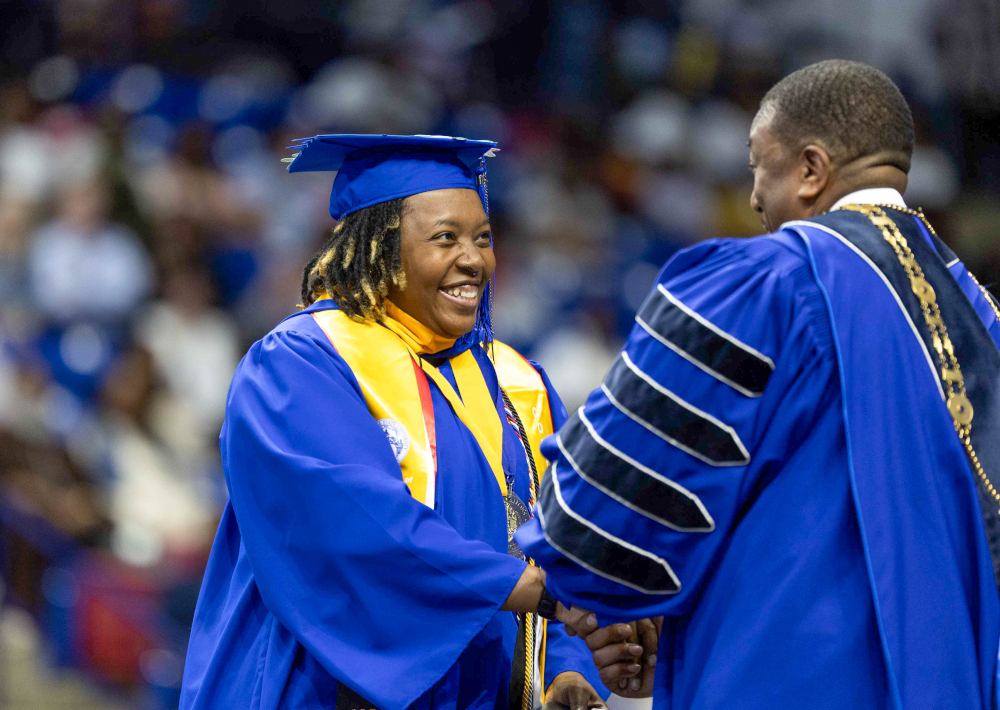
FAYETTEVILLE, N.C. – When Shereiff Garrett crossed the stage at the Crown Coliseum on May 9, she was part of a historic milestone. She joined the largest group of degree earners in Fayetteville State University's history.
The institution awarded 1,003 baccalaureate degrees during the morning ceremony. This was part of a record-breaking weekend during which the institution conferred 1,247 degrees.
Among the students, Garrett, a computer science major, Navy veteran, and first-generation graduate, represents the talent, discipline, and purpose FSU sends into the workforce and advanced study.
Two months before graduation, Garrett placed first in the Computer Science and Information Management oral presentation category at the 2026 Emerging Researchers National (ERN) Conference in Atlanta. The event, hosted by the American Association for the Advancement of Science and the National Science Foundation, included 400 presentations and over 700 participants. Garrett’s project used artificial intelligence to help detect pneumonia in pediatric chest X-rays, blending technical skill and personal motivation.
Her study grew from a personal ordeal. Her younger brother’s bout with pneumonia led her to investigate how medicine and AI can collaborate to provide faster, more informed care. Under the guidance of her mentor, Chandra M. Adhikari, Ph.D., and co-mentor, Bhoj R. Gautam, Ph.D., she developed the project while balancing the demands of student life.
“Research is a big way of giving back to humanity and also leaving a legacy behind that will continue to serve others when I’m long gone,” Garrett said.
This sense of duty translates into significant practical applications. Pneumonia remains a serious health threat, and Garrett emphasized the importance of early detection in improving patient outcomes.
"Pneumonia is one of the most critical conditions where early identification can truly make a difference," Garrett said. "Having that detection capability could save lives."
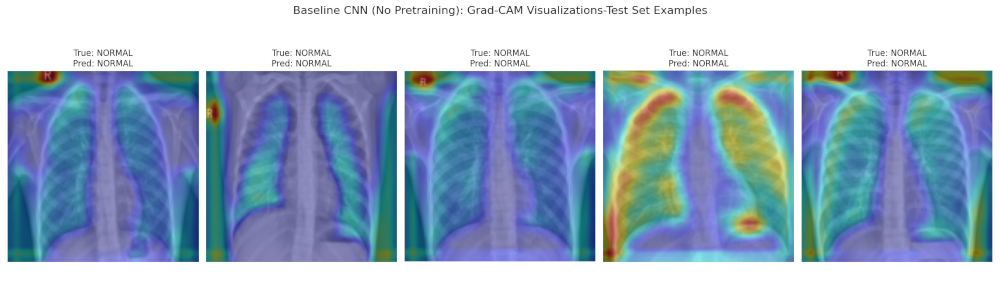
Her award-winning presentation also reflected personal growth in communication. Determined to make her technical work accessible, Garrett focused on conveying the story behind her research rather than just the code and model comparisons.
“I’ve always loved stories,” Garrett said. “I thought, if I share my work as a story, maybe people will be able to follow along and truly understand.”
That combination of intellectual depth and public purpose guides Garrett’s next chapter. This fall, she begins a doctoral program in computer science at Johns Hopkins University to continue research in medical AI.
Garrett’s path has been unconventional. Before FSU, she served three years in the Navy as a gas turbine mechanic and worked as a truck driver. Inspired by podcasts, she switched to computer science, where campus mentorship turned her curiosity into a nationally recognized research project. She credits Adhikari, the Department of Energy Basic Energy Sciences program, and the McNair Scholars Program for guiding her from idea to execution.
Mia Danielle Thompson and Sokhna Amar
While Garrett’s achievements stand out, she is part of a broader surge of excellence at FSU. Expanding on this, two other seniors—Mia Danielle Thompson and Sokhna Amar—also earned national recognition and travel awards at the ERN conference. Like Garrett, each used research to address pressing real-world questions, extending the impact of their work well beyond the classroom.
Thompson, a chemistry major with a minor in forensic science, earned second place in the oral presentation division of Nanoscience and Materials Science. Her research focused on improving supercapacitors by enhancing the materials used in them, enabling them to store more energy for devices ranging from wearable technology to hybrid cars.
“I feel like anybody can benefit,” Thompson said. “The demand for energy is only going to increase as the world discovers newer technologies.”
A student-athlete on the women’s track and field team, Thompson said the experience built her confidence and demonstrated that Fayetteville State students can compete with anyone. After graduation, Thompson will continue her work through an internship at North Carolina A&T State University’s Joint School of Nanoscience and Nanoengineering in Greensboro.
Amar, a computer science major, earned second place in the poster presentation field for her work on LUMEN, an AI assistant designed to make NASA’s Planetary Data System easier to search using natural language. Her efforts focused on making a complex scientific archive more accessible to researchers and everyday users alike.
For Amar, a key takeaway from the conference was emphasizing the importance of visibility in science. “You can’t have science that serves all without scientists that represent all people,” Amar said.
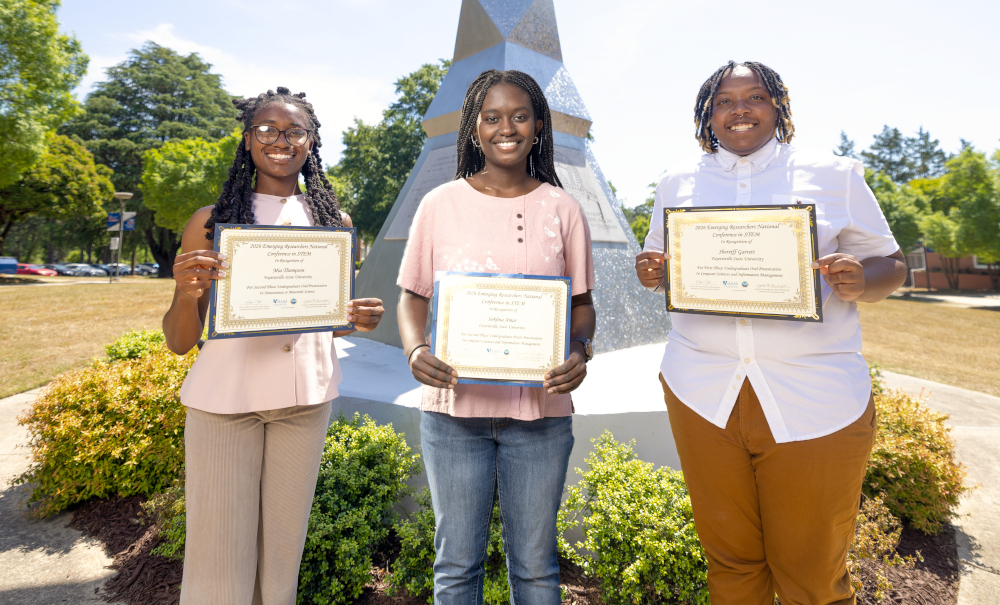
Taken together, Garrett, Thompson, and Amar provide a strong picture of what this graduating class represents. Their work spans public health, energy innovation, and scientific access. Their stories reflect discipline, curiosity, and a willingness to step into difficult spaces with confidence. Each leaves Fayetteville State with research experience and a clear sense of purpose.
As FSU celebrates a record-setting group of graduates, students like these three help define what that milestone means. The numbers matter, but the people behind them carry the real impact. In this class, the university is sending forward researchers, problem-solvers, and leaders prepared to contribute in ways that reach far beyond commencement day.