

Fayetteville State Opens Nearly $70 Million College of Education, Investing in the Future of North Carolina Educators
New 72,000-square-foot facility advances FSU’s historic teacher preparation mission while expanding academic capacity for the university’s continued growth
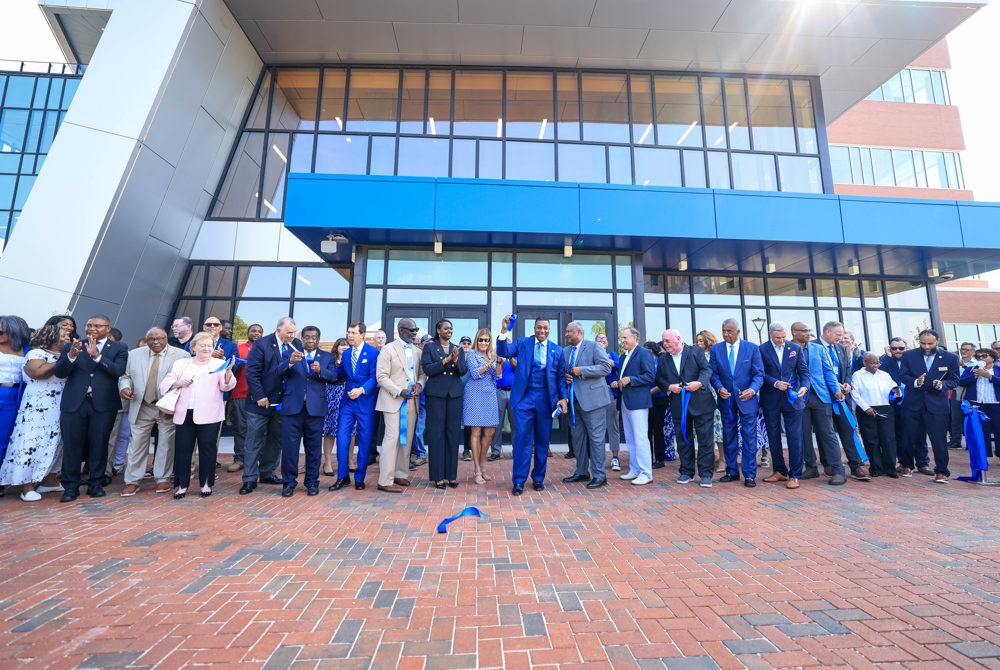
FAYETTEVILLE, N.C. - Nearly 160 years after Fayetteville State University was founded with teacher education at the heart of its mission, the university opened a new $69.3 million College of Education building today, positioning FSU to prepare the next generation of educators while expanding its capacity to serve a growing university.
FSU celebrated the opening with state and local officials, members of the University of North Carolina Board of Governors and FSU Board of Trustees, students, alumni and community partners. The four-story, 72,000-square-foot facility was funded through capital appropriations from the North Carolina General Assembly.
The investment comes as schools across the state continue to need teachers and educational leaders, a challenge Chancellor Darrell T. Allison connected directly to Fayetteville State’s founding purpose.
“Teacher education is not simply one of FSU’s academic programs. Teacher education was our founding purpose,” Allison said. “Our state and nation are facing major crises and the need to produce more future teachers and educators. Fayetteville State University answered the call of yesteryear, and this state investment of nearly $70 million at Fayetteville State University will answer the call once again.”
Founded in 1867, FSU traces its origins to seven Black men who pooled $136 to purchase property for the education of Black children. A decade later, the institution became the State Colored Normal School, and the first state-supported institution in North Carolina established for the education of Black teachers.
Today, FSU’s College of Education prepares teachers and educational leaders serving schools and communities throughout North Carolina.
The new facility brings College of Education students, faculty, staff and programs previously located across campus into one academic home. It includes classrooms, laboratories, faculty offices, conference rooms, a STEM lab, outdoor learning areas and collaborative spaces. Classrooms also incorporate technology supporting contemporary in-person and hybrid instruction.
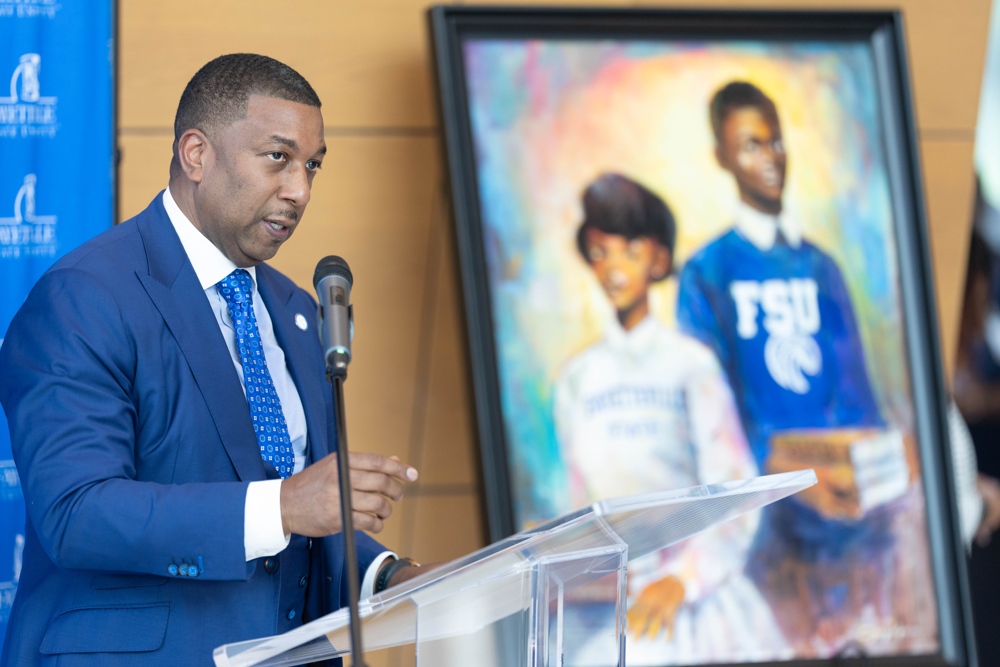
Provost and Vice Chancellor for Academic Affairs Scott Krawczyk said the investment creates opportunities that extend beyond the building itself.
“This facility gives our faculty new opportunities to innovate in teaching, scholarship, and educator preparation,” Krawczyk said. “It gives our students a modern environment in which to learn their profession. It strengthens our partnerships with schools and communities throughout the region and reaffirms Fayetteville State’s enduring commitment to the future of education in North Carolina.”
Those partnerships already place FSU students in local schools.
Brooke Guglielmello, an elementary education major, Army veteran and participant in the College of Education’s reading clinic, described working with young students at Jefferson Street Elementary and helping children develop their literacy skills.
“Watching a child go from struggling with sounds to reading with pure confidence and joy showed me that teaching is so much more than a profession,” Guglielmello said. “It’s a calling.”
UNC Board of Governors Chair Kellie Blue placed the opening within the larger responsibility of public universities to respond to the communities they serve.
The new building provides space for reading clinics, special education and the state-funded North Carolina Teaching Fellows Program, which provides forgivable loans to help recruit students into the teaching profession.
“There is no public investment more transformative than education, especially for those who call this region home,” Blue said. “FSU shines as that example of how a state’s regional institutions are best positioned to meet the needs of the communities that surround them.”
The College of Education is also a major component of FSU’s 2023 to 2033 Campus Master Plan. In addition to providing new academic space, consolidating College of Education programs gives the university greater flexibility to renovate and repurpose existing facilities as enrollment and campus needs evolve.
The building itself was designed to connect that future with Fayetteville State’s history.
Architects incorporated references to FSU’s seven founders throughout the facility. The number seven is represented abstractly in elements of the exterior canopy, brick and glass, and continues inside through woodwork, stairs and lighting. The project was among the final designs associated with the late Curt Moody, founder of Moody Nolan and an influential Black architect.
The celebration also included the unveiling of a newly commissioned work by artist Jerry Lynn that will have a permanent home in the building lobby. Associate Professor of Visual Arts and Design Dwight Smith said the piece was created to reflect FSU’s culture, aesthetics and mission while encouraging students and alumni to see themselves in the university’s story and consider where they are capable of going.
Krawczyk described the artwork as a connection to FSU’s past, present and future and said it will remain on display for future students and generations to experience.
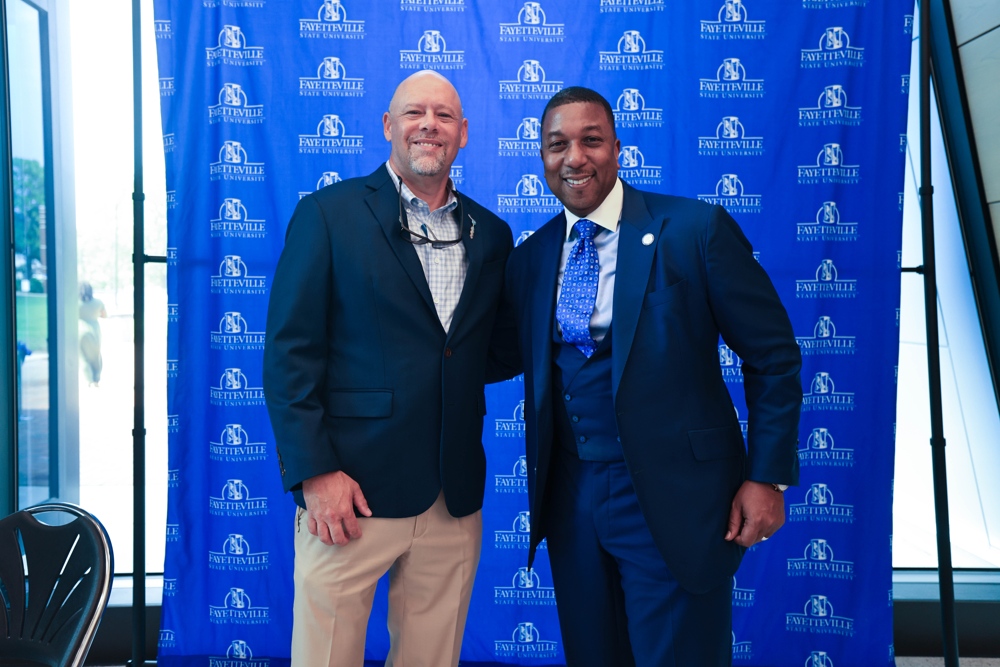
Metcon Construction, headquartered in Pembroke, led construction of the facility. During today’s celebration, Metcon CEO Aaron Thomas also announced a new partnership with FSU involving the university’s construction management program. Allison announced that Metcon contributing $250,000 to the program.
Thomas said the company plans to bring industry professionals and experience directly into the classroom as part of the partnership.
“We don’t want to just build buildings at Fayetteville State,” Thomas said. “We want to help Fayetteville State build futures.”
For Allison, the opening represents both a return to the university’s beginnings and an investment in what comes next.
“This new College of Education is the vision of the future of education,” Allison said, “and it intends to prepare the next generation of educators to meet the challenges of today who will then produce solutions for our tomorrow.”