

Student Perspectives: My Grandmother’s Story Became My Research and My Purpose
By Anastasia Sellars-Thompson
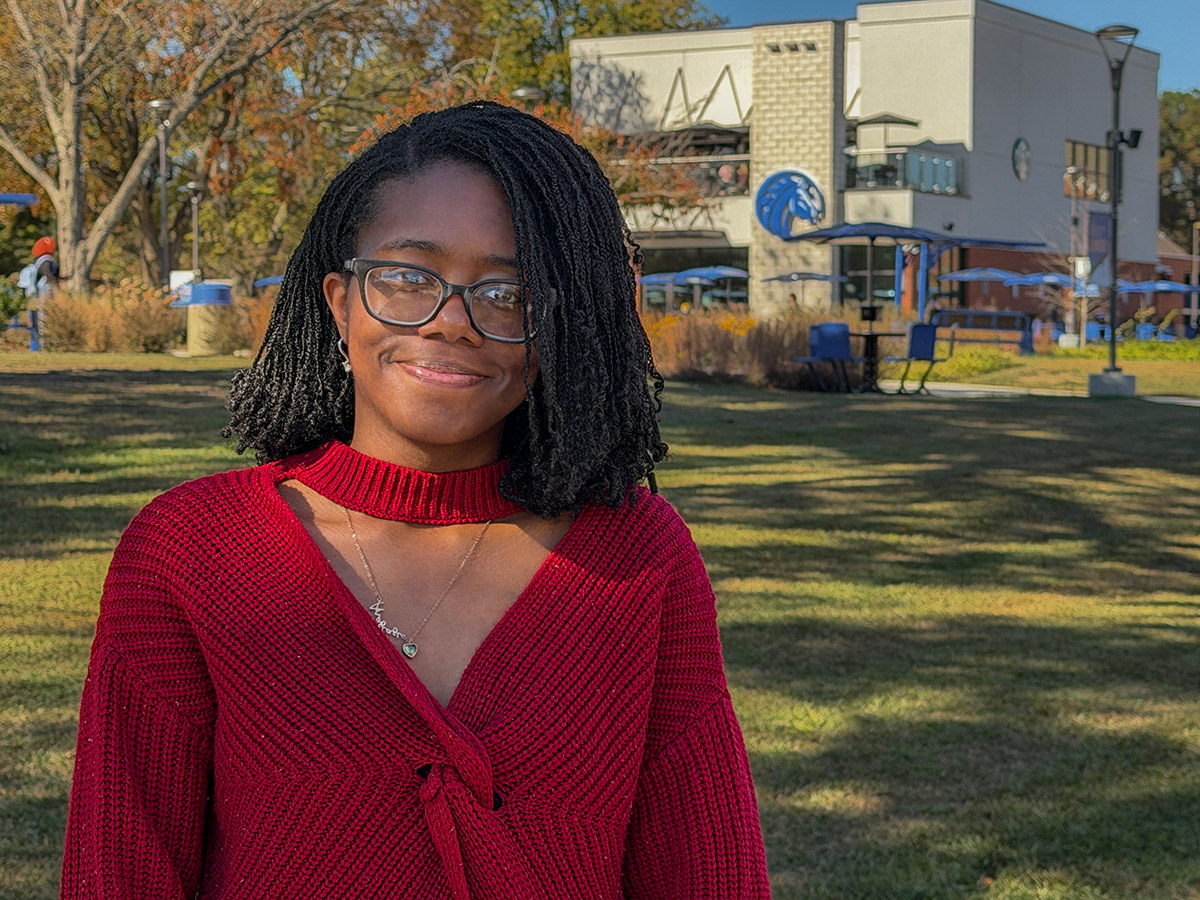
For a long time, I did not have the language to explain the challenges my grandmother and I experienced when she became my primary caregiver. I only knew our circumstances had changed, and we were figuring things out as we went along.
At 14, after a family crisis, my grandmother stepped into the role of raising me through an informal kinship care arrangement. Although she was willing to provide a home and stability, navigating the systems meant to support families like ours was not easy.
Before moving in with my grandmother, I had been out of school for nearly two years. I missed what would have been my entire seventh-grade year and about two-thirds of eighth grade. When my grandmother tried to enroll me in school, she learned she needed legal documentation establishing her authority to make educational decisions on my behalf. We eventually sought help from the Department of Social Services, where we were assigned a social worker, and my grandmother received temporary guardianship.
By the time the necessary arrangements allowed me to return to school, only three months remained in the academic year.
Despite the circumstances, I passed eighth grade based on my end-of-grade test scores. I went on to thrive academically, eventually graduating from high school a year early as valedictorian of my class. My grandmother's willingness to step in made a difference in my life, but the experience also left me with questions: Why do families who step forward to care for their grandchildren have to navigate so many barriers? Why are the resources available to caregivers not always accessible to those who need them most?
I carried those questions with me to Fayetteville State University, where I am a senior majoring in social work.
As a first-generation college student and Ronald E. McNair Scholar, I found opportunities to explore questions beyond my own experiences. Through the McNair Scholars Program, I developed the skills and confidence to examine social issues more critically. With the encouragement and mentorship of my McNair adviser and research mentor, Dr. Tamara Woods, I recognized that my personal experiences could inform meaningful academic work.
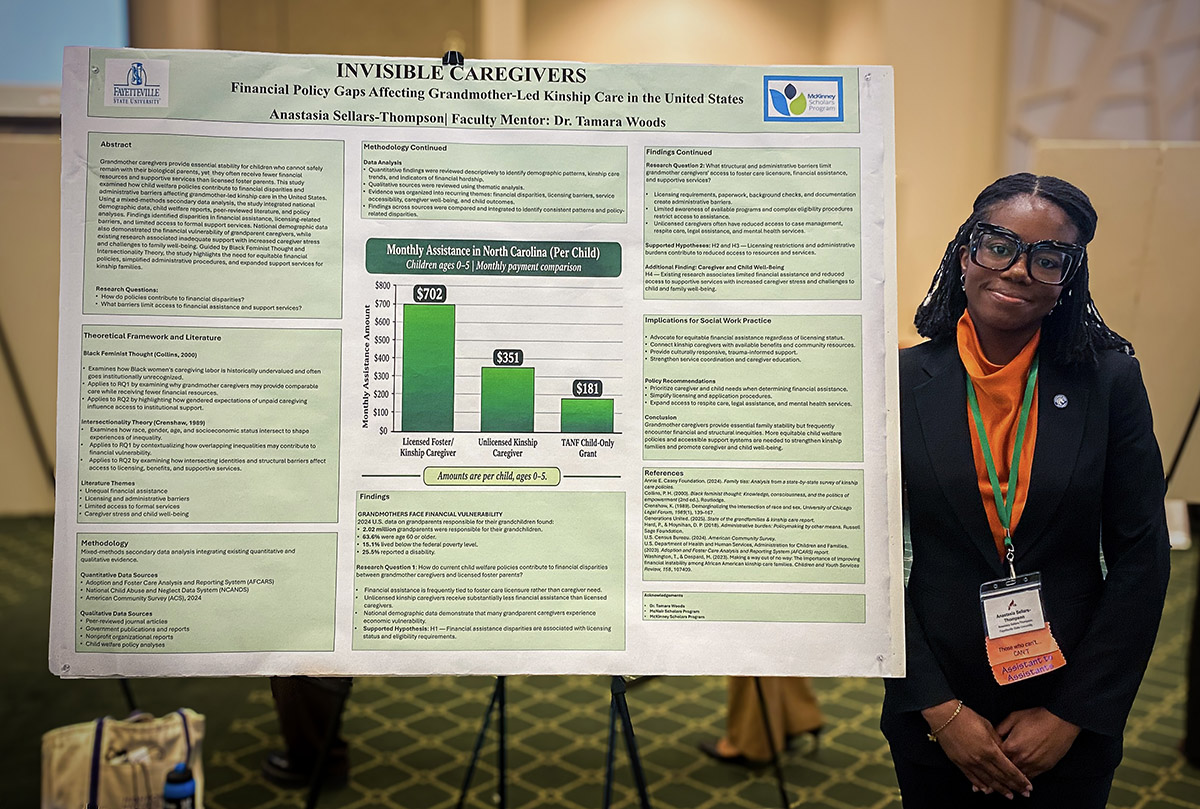
That realization eventually led me to my research topic: “Invisible Caregivers: Financial Policy Gaps Affecting Grandmother-Led Kinship Care in the United States.”
I wanted to understand the financial and administrative disparities between relatives raising children through kinship care and licensed foster parents. Through my research, I identified barriers involving unequal financial assistance, access to supportive services, administrative requirements and the emotional and financial strain placed on kinship caregivers.
What began as a question rooted in my own childhood became a 56-page thesis examining broader policy and systemic concerns. I was particularly struck by how access to resources can depend on a caregiver's ability to meet licensing requirements, even when that caregiver provides the same stability and care to a child.
I began to understand that what my grandmother and I experienced was not simply an isolated family challenge. It reflected gaps within systems that affect families across the country.
My experience as a McNair Scholar also opened doors I had not previously imagined.
Through my McNair adviser, I learned about the McKinney Scholars Program at the University of North Carolina Frank Porter Graham Child Development Institute (FPG). I was drawn to its emphasis on research, mentorship and child development. As a McKinney Scholar, I had the opportunity to engage with experienced researchers and explore areas such as technical assistance and implementation science. These experiences expanded my understanding of how research can move beyond identifying problems to developing and implementing solutions.
In particular, learning about implementation science challenged me to think about what happens after research is completed. How do we take what we know and ensure it reaches the families and communities who need it?
I began imagining how evidence-informed approaches could improve access to financial assistance and supportive services for kinship families in North Carolina. I am now working with Dr. Woods to develop my thesis manuscript and hope to pursue publication.
While research has been an important part of my journey, some of my most meaningful experiences at Fayetteville State have come through mentorship. I have been fortunate to encounter professionals who took the time to know me beyond my academic achievements.
They encouraged the quiet girl who sometimes questioned whether she belonged in higher education and reminded me I could pursue goals I once thought were out of reach. Their investment in me has shaped not only the student I have become but also the professional I hope to be.
As I prepare to graduate, I plan to pursue a Master of Social Work and eventually become a Licensed Clinical Social Worker. I hope to work with children, adolescents, and families while continuing to explore research, policy, and systems-level change.
My long-term goals include establishing a private practice, contributing to improved support systems for kinship caregivers, expanding transitional housing opportunities for youth aging out of foster care, and eventually pursuing a doctoral degree so I can teach and mentor future social workers.
When I think about my journey, I often return to the grandmother who stepped into a role without a roadmap and did what she could with what she had. My research is, in many ways, an extension of that experience. I cannot change the barriers we encountered, but I can use what I have learned to help others understand why those barriers matter.
Fayetteville State University has given me more than an education. It has allowed me to turn questions into research, research into conversations, and conversations into possibilities for change. I hope to spend my career helping ensure that families like mine do not have to navigate those challenges alone.