

Fayetteville State Professor Raymond Summerville Honored for Research on Civil Rights History and African American Folklore
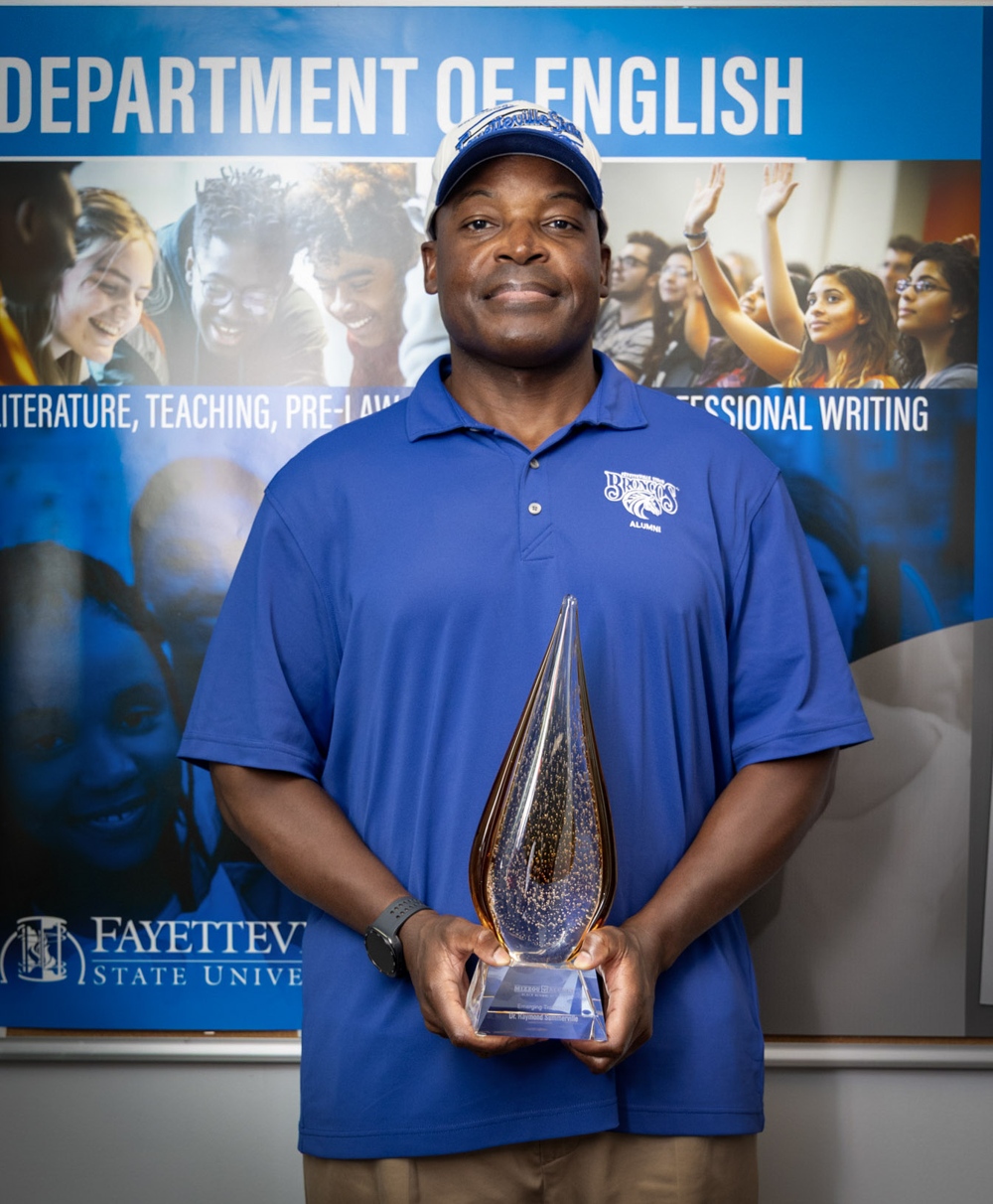
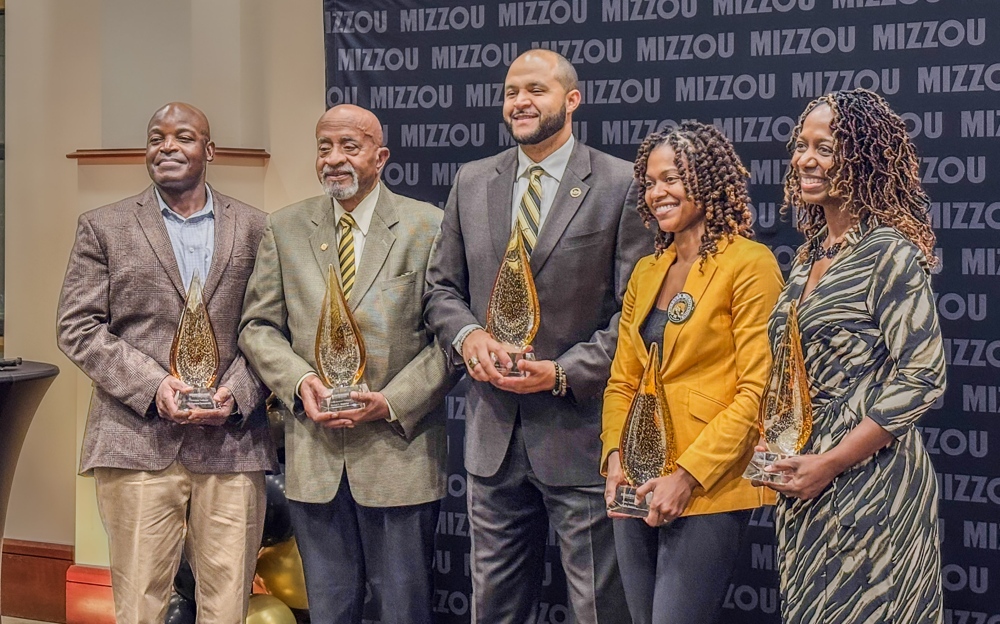
FAYETTEVILLE, N.C. – Raymond Summerville, Ph.D., an assistant English professor at Fayetteville State University, received the Emerging Trailblazer Award during the 7th Annual Trailblazer Awards ceremony Oct. 2 at the Reynolds Alumni Center at the University of Missouri-Columbia.
The Mizzou Black Alumni Network presented the award during the university’s homecoming week as part of an annual ceremony celebrating the achievements and service of its Black alumni. The Emerging Trailblazer Award honors graduates who have made significant contributions to their fields within 10 years of graduation, including Summerville’s work in English and African American folklore.
“It was really surprising,” said Summerville. “It means a lot to me because I learned so much there. I was introduced to folklore at the school, and that’s what most of my scholarship is centered on: folklore and folklore studies.”
Summerville looked back fondly at his time at the university, noting the encouragement from his professors.
“[The award] shows how generous they were,” he said. “They have a strong network of people that try to make students feel welcome and appreciated; they really work hard to lure students there and retain students, and it definitely meant a lot to me as a graduate.”
From Student to Recognized Scholar
Summerville, a North Carolina native, graduated from the University of Missouri-Columbia with a doctorate in English, concentrating in African American folklore, after completing his undergraduate studies at North Carolina Agricultural and Technical State University. He also earned a master’s degree in arts and bachelor’s degrees in science and mass communication/media studies, all from North Carolina A&T.
After his tenure at North Carolina A&T as an adjunct instructor, Summerville transitioned to teaching at Fayetteville State University in 2021. Since joining the institution, he has published several academic papers and a book, he said.
“Working here, it’s been really great,” he said. “They are definitely a school that values research. Since coming here, I’ve had maybe 10 or 12 papers published, and I published a book a couple of years ago.”
Examining the Power of Language in Civil Rights History
Summerville’s research focuses on how phraseology and proverbs shaped political movements over time, with a focus on American and African American history.
“Phraseology was very important, and specifically proverbs,” he said. “People would use them to communicate to large groups and to rally people. Connecting all those different areas, I think, is the way I like my work to be viewed.”
His first book, Proverb Masters: Shaping the Civil Rights Movement, was published in 2024 and details the use of proverbs and language in the Civil Rights era. The book includes an analysis of Civil Rights icons such as Malcolm X, Ida B. Wells and Charles W. Chesnutt, namesake of the Charles W. Chesnutt Library on FSU’s campus.
His most recent published paper, Gratitude is the Curse of the Republics: The Proverbs and Proverbial Expressions of Wharton Jackson Green, was published back in March. The paper is a deep dive into the life of Wharton Jackson Green, a Civil War veteran and former North Carolina Congressman.
Throughout the book, Summerville notes Green’s impact on the state, including his involvement in creating the University of North Carolina System and his connection to Fayetteville. Green’s Tokay Vineyard, once the largest vineyard east of the Rocky Mountains, operated in Fayetteville, and Green’s burial site is located at Cross Creek Cemetery in downtown Fayetteville.
Summerville’s book is published in the Proverbium: Yearbook of International Proverb Scholarship, adding a new research angle to an already detailed written history of the Civil War.
His next book will be like his previous work, but with a focus on different civil rights voices of the era.
“The new one is going to cover lesser-known voices … people who aren’t usually thought of as being key players in the Civil Rights movement, even though they were very, very influential,” Summerville said. “Some of the younger people like Melba Beals and Ann Moody, and Paul Robeson, and also include some literary voices as well, like Ernest Gaines.”
As Summerville continues his academic journey at FSU, the Emerging Trailblazer Award symbolizes his work, with more books and papers on the horizon.
Additional publications by Summerville are available through the university’s Digital Commons page at digitalcommons.uncfsu.edu.