

From Founders to Freedom Fighters with Nicholle Young St. Leone for Black History Month
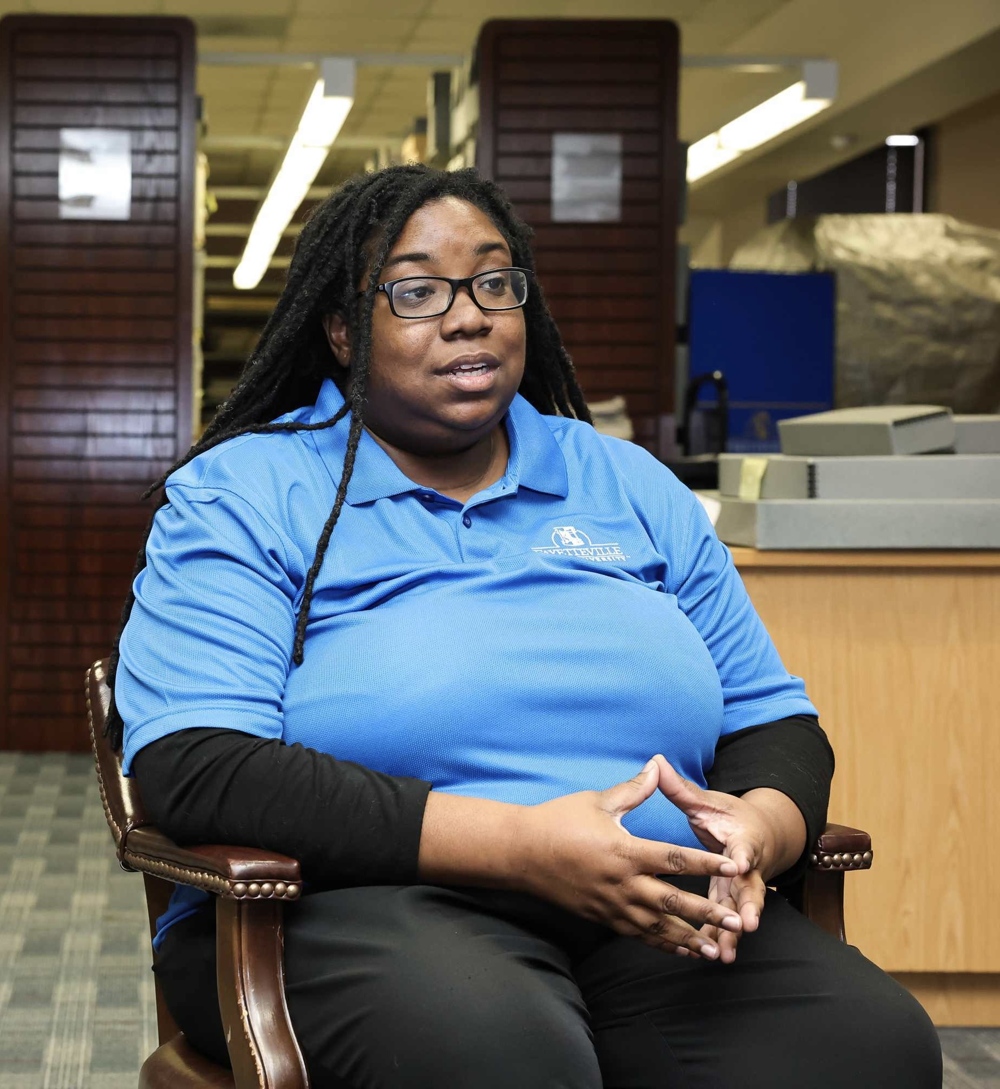
The fourth floor of the Charles W. Chesnutt Library feels different. It’s quieter and more thoughtful, almost as if the building wants you to slow down. Nicholle Young St. Leone sat across from me in a wooden chair, with shelves of archival volumes and boxed collections behind her. When she began talking about Fayetteville State University, her eyes shone with pride and then with a focused intensity. She shifted into historian mode, recalling names, dates, and connections as easily as others make small talk.
As Black History Month wraps up, we’re sharing a conversation that brings readers into the space where Fayetteville State’s story is kept and shared. Nicholle works as the archives technician and African American studies researcher for Archives and Special Collections at Chesnutt Library. She carries a deep sense of responsibility for the legacy she helps protect.
“Knowing that I was hired and involved in protecting and preserving the university’s legacy has been a very big deal to me,” she said. “I take that very seriously.”
You’re more than just a staff member here—you’re part of the university’s living history. So, for those who don’t know you yet, just how deep do your Bronco roots go?
I graduated from preschool here in 1991 and earned my bachelor's degree in 2021. My family ties reach back to the very foundation of the school. One of my extended family’s ancestors, David A. Bryant, was one of our seven founders. Another relative, George H. Williams, served as one of the early principals. My mother graduated in 2001 after serving in the U.S. Army.
It’s amazing how closely your family history is tied to this place. Speaking of family treasures, you mentioned your Williams relatives donated something special from before the school was even officially founded. What is that item?
It’s a document from November 1866 recognizing one of the primary schools that became the Howard School of Fayetteville. My family held onto it for over a century until I was hired here. It is rare to have original data from that era, but it proves that FSU didn’t just appear in 1867; it was born of a pre-existing grassroots Black community effort to educate itself.
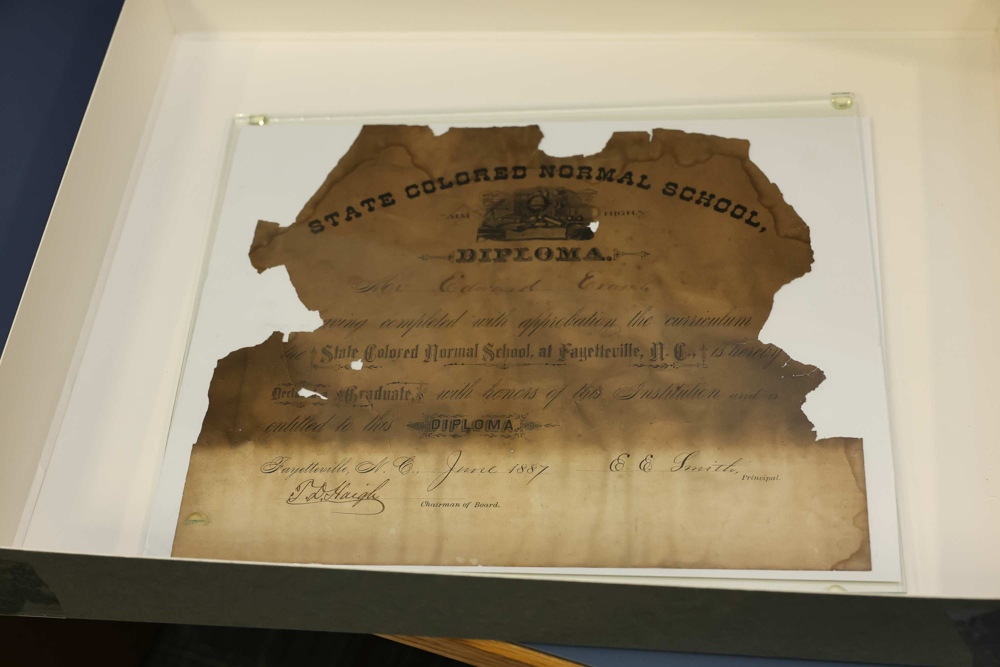
If the 1866 document is our oldest record, let’s talk about diplomas—what’s the oldest degree you have? And is it true that it almost didn’t survive?
Our oldest degree currently on file is from 1887. It belonged to Edward Evans. and was earned only twenty years after the school was established. This specific diploma survived a house fire on Orange Street. A legacy item from the past is still with us in the present day, reflecting the resilient history of Black education during Reconstruction.
You mentioned a mysterious item with a hidden “secret.” That sounds intriguing! What’s special about Dr. E.E. Smith’s passport?
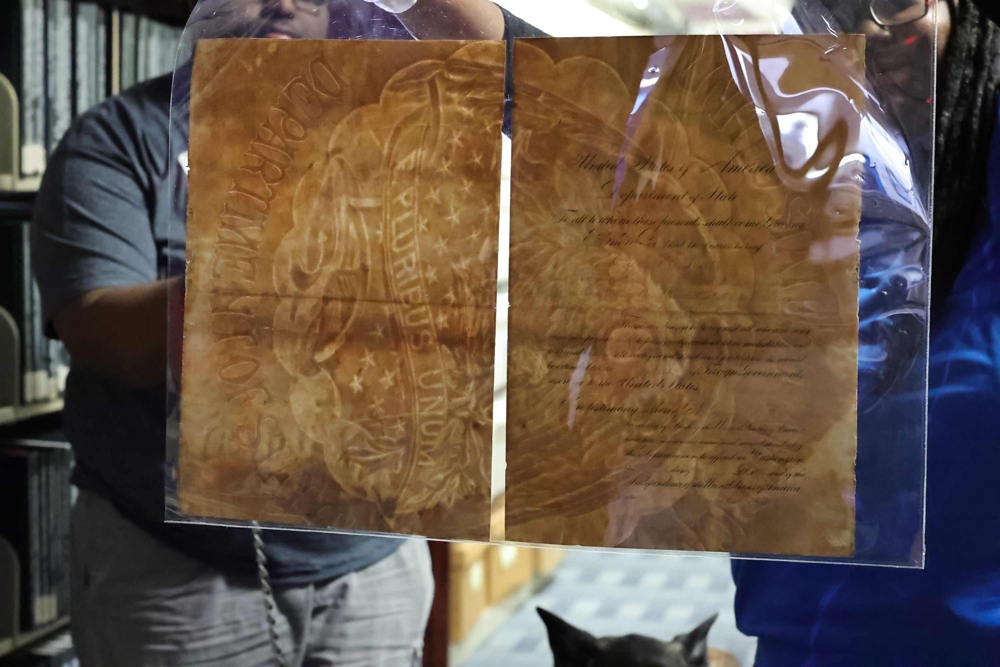
Dr. E.E. Smith was appointed resident minister and consul general to Liberia by President Grover Cleveland. We have his original passport, which looks ordinary until you shine a light through it. A hidden watermark seal of the United States appears through the paper. It shows that even in the 1880s, FSU leaders were not merely local figures; they were global diplomats shaping international policy.
Many people might not realize that FSU has this global influence. Thinking about these big connections, is there a particular origin story you want the campus community to remember as Black History Month wraps up?
I want people to know about our ties to the Amistad. The American Missionary Association supported early Black educational efforts, and the organization grew out of a committee formed to defend Africans involved in the Amistad case. We are part of a massive legacy of activism, both national and international.
Learning about our connection to the Amistad defense really changes how you see the campus. And since you’re surrounded by all these legacies, you often help visitors trace their family trees using these records. What do people usually come searching for?
We get many requests for our yearbooks and older catalogs. People want to find relatives who attended the school in previous decades. In our catalogs from before the 1970s, students were listed by name, which helps families confirm when relatives matriculated. Digital access has expanded, too. Many Fayetteville State yearbooks are available through DigitalNC, and additional materials and exhibits are available through Digital Commons at Fayetteville State University.
Earlier, you mentioned the student protests in the 1960s. How did those students end up making an impact on Fayetteville?
Our students were instrumental in desegregating downtown Fayetteville. In the summer of 1963, Fayetteville State students helped lead sustained demonstrations that pressured local businesses to desegregate, and Fort Bragg soldiers joined the protests in support. It’s a history of leadership that changed the city before the Civil Rights Act of 1964 was passed.
That kind of courage really shows why first-hand accounts matter so much. While we’re on that subject, why is it important to record oral histories from alumni like former Chancellor Dr. Willis B. McLeod?
Dr. McLeod was the first alumnus to serve as chancellor. Capturing these stories through interviews preserves the lived experience of our history. We want students to engage with our elders to create short documentaries about these pivotal eras. These personal accounts offer a perspective that documents alone cannot provide.
A lot of people see the current Murchison Road campus as the school’s only home, but the journey started elsewhere, didn’t it? When did the institution finally make the move to this location?
The university’s founders signed the deed on November 29, 1867, paying $136 for two lots on Gillespie Street so the Freedmen’s Bureau could build a school for Black children. Under Dr. Smith’s leadership, the institution purchased a 40-acre site on Murchison Road in 1907, and the 1908 school year opened on the new campus.
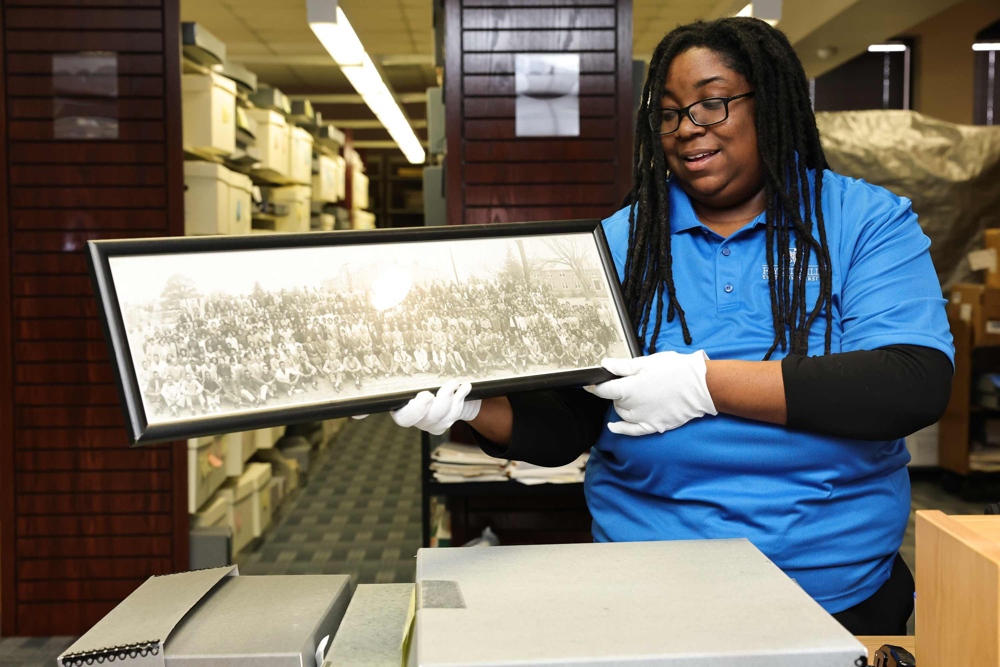
It’s amazing to see how the campus has grown from just two lots to now approximately 156 acres! For anyone who is now curious and wants to see these artifacts in person, when and how can they visit the Archives and Special Collections?
We are located on the fourth floor of the Chesnutt Library and are open Monday through Friday, 9 a.m. to 5 p.m. Students, alumni, faculty, staff, and community members are welcome to visit, ask questions, and explore what is available for research. Whether it’s genealogy or university history, we are here to help you connect with the story.