

Games People Play
FSU professor’s new book connects historical events and communication styles
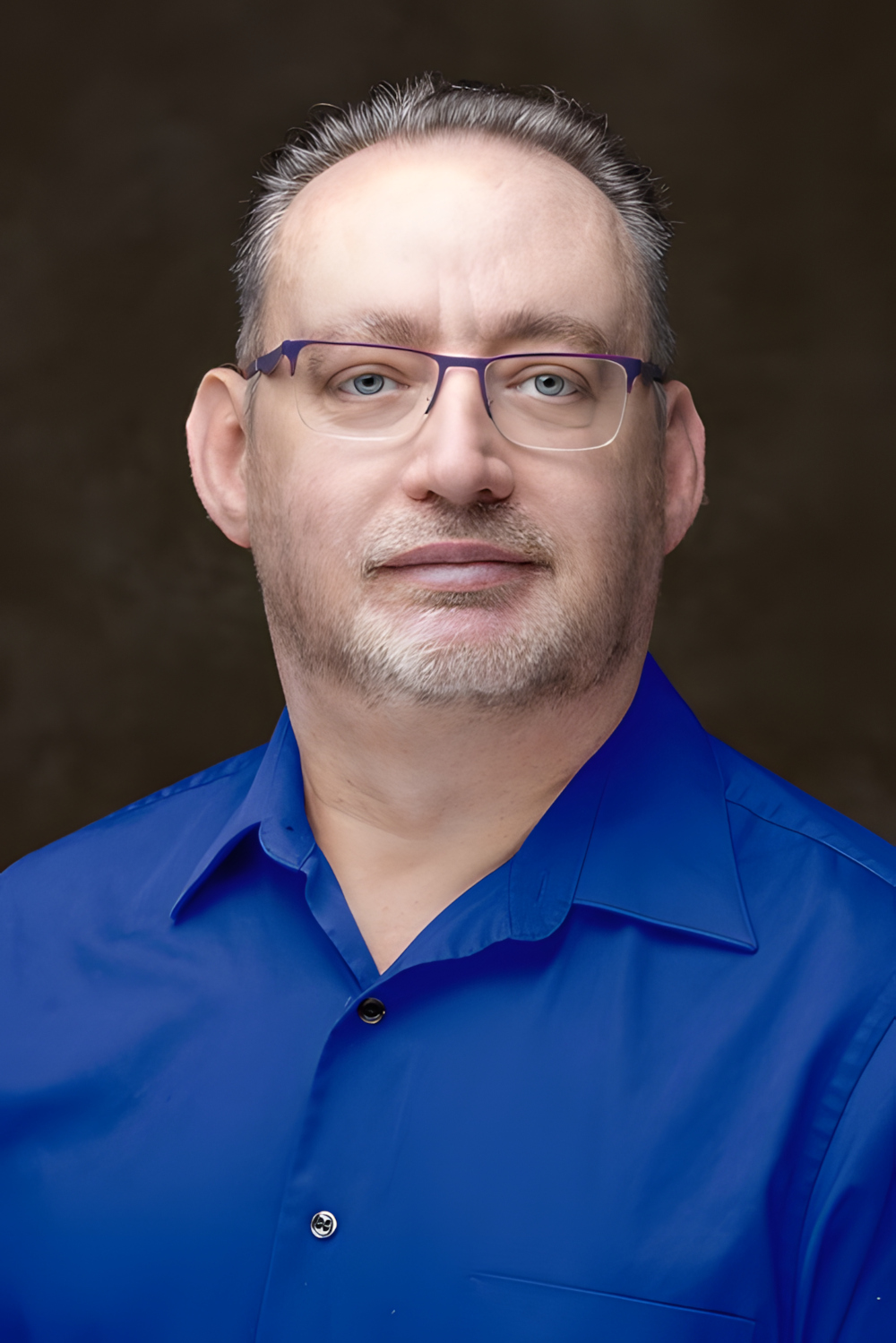
Professor Todd S. Frobish, Ph.D., has experienced quite the journey – transforming from a shy boy with a stutter into a champion orator, and ultimately, a highly respected professor at Fayetteville State University and the author of a new book that is capturing the attention of the literary and academic worlds.
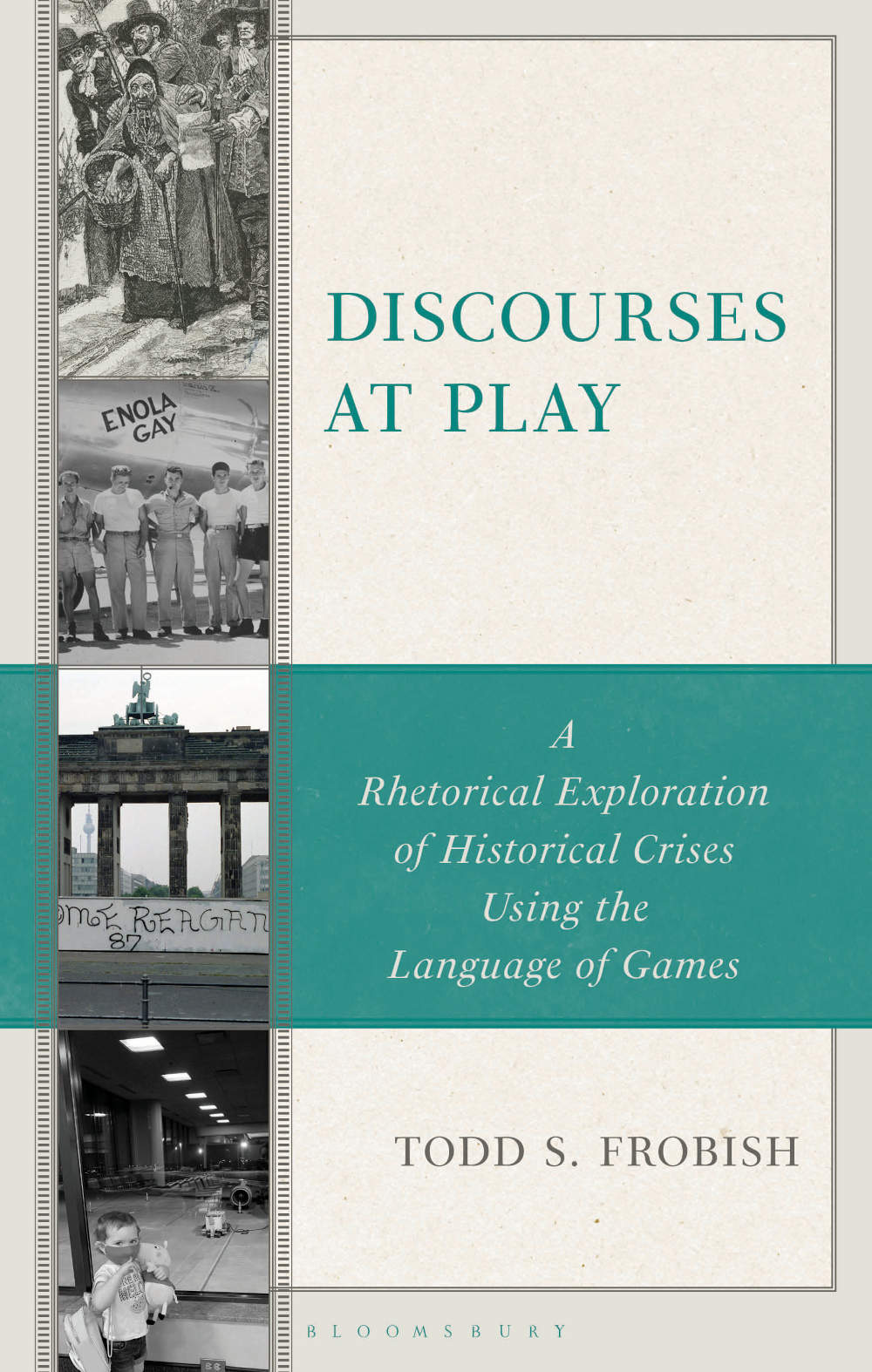
His book, “Discourses at Play: A Rhetorical Exploration of Historical Crises Using the Language of Games,” is as original and insightful as the professor who inspires every day in the Department of Communication, Languages, and Cultures. “Games” is an operative word.
“We are game-obsessed in this society,” said Frobish. “Mobile games, video games, board games … We had games before there was language.”
To that end, Frobish explores a diverse set of historical crises through the lens of "rhetorical gameplay," an approach that serves as an intersection of rhetorical theory and game studies, according to the book’s Amazon description.
The field of rhetorical studies has yet to embrace the subject of gaming and play, Frobish points out. While previous methods, such as dramatism, narrative analysis, fantasy theme, and more, are still powerful and useful as critical methods, he argues that rhetorical events can be analyzed as games of persuasion, choice, and play.
Frobish tests this model through a textual examination of four large-scale rhetorical events: the Salem witch trials, the COVID-19 pandemic, the fall of the Berlin Wall, and the bombing of Hiroshima. He argues that these major events constitute rhetorical games with Players, Rules, Match Turns, and Outcomes, and focuses on the persuasive choices that guide these games toward resolution.
Through these events, Frobish states that readers become familiar with effective and ineffective communication strategies and use gaming vocabulary to understand the persuasive mechanisms behind them.
Story Behind the Book
Call it serendipity or just being at the right place at the right time – with the right research paper.
Rewind to 2023, when Frobish was attending the annual conference for the National Communication Association in National Harbor, Maryland, with thousands of attendees. There, he presented an original paper about Bridget Bishop, a midwife and the first person to be executed at the Salem witch trials in 1692.
“It’s a game that played out … how the young girls gained a voice in their community,” explained Frobish. “There was already a disdain for people who didn’t belong.”
Frobish said the paper became the genesis for his “whole methodology for studying communications during crises.”
And, notably, Frobish’s paper caught the attention of an editor for a publishing house. She approached him to discuss the premise and write a book.
To have enough time to research and write the book, Frobish made the tough decision to step down as department chairman, a position he had held for most of his years at the University. He arrived at FSU at 28 and is now 51 – and has spent most of those years as department chair.
“I had one heavy year of writing, mostly in 2025,” said Frobish, who describes himself as a “night owl.”
On February 5 of this year, the 216-page book was released by Bloomsbury Academic. It is available on Amazon in hardcover ($110) and Kindle ($99) versions, and also at major booksellers. Because it is an academic book, the price is somewhat high, Frobish said, adding that a more affordable version in paperback will be out in 2027.
In the meantime, he has done a number of talks at area bookstores, with more planned in the near future. He has been approached by another publisher about writing another book with a games theme related to communications. He has signed on.
His current title is not his first venture into book publishing. In 2007, he edited “Crises in American Oratory: A History of Rhetorical Inadequacy,” also available on Amazon. Frobish describes the book as a compilation and analysis of “the worst speeches in U.S. history.”
Determined to Speak Up
Growing up in Bradenton on Florida’s Gulf coast, Todd Frobish was a shy kid with a stutter.
“I had a speech impediment,” he recalled. “I could not pronounce my rr and sh.”
A speech pathologist who believed in his potential encouraged him to enter a speech contest. He chose to speak about “The Dangers of Alcoholism.” He referenced his own home situation, as his mother was married (briefly) to an alcoholic, and how it affected his family.
He won first place. “I think I might have gotten some pity points,” he quips.
But one thing was for certain. Nothing would be the same again. He became laser-focused on becoming an outstanding orator and on teaching others how to conquer their own challenges and fears of public speaking.
Frobish would go on to earn his associate of arts degree from Manatee Community College, a bachelor’s from the University of Florida, a master’s from the University of Louisiana in Monroe, and a doctorate from The Pennsylvania State University – all in Speech Communication.
A year after receiving his Ph.D. in 2002, he accepted a position at Fayetteville State and never looked back.
Frobish said that he’s excited about his future years at FSU, and whatever games still await him as he continues his journey as a teacher and scholar.