

Researchers at the Broadwell College of Business and Economics Share New Insights Into What Shapes Happiness
New findings from Fayetteville State University faculty Baeyong Lee and Hoolda Kim identify the community-based factors that will define quality of life for the next generation of retirees.
FAYETTEVILLE, N.C. – Imagine turning 70 and realizing your happiness depends not just on personal circumstances, but also on your surroundings, such as trust in your community, national stability, and your sense of connection to others.
Understanding how these factors shape quality of life is the focus of recent research by Broadwell College of Business and Economics faculty, published Feb. 5 in the Journal of Happiness Studies, an international publication focused on subjective well-being.
Baeyong Lee, Ph.D., associate professor of finance, and Hoolda Kim, Ph.D., associate professor of economics, authored the article. Their study, "Exploring the Determinants of Subjective Well-Being in Older Adults: A Cross-National Analysis of Social, Political, Economic, and Demographic Factors," examines quality of life among people ages 50 and older across 58 countries, using World Values Survey data from 2017 to 2022.
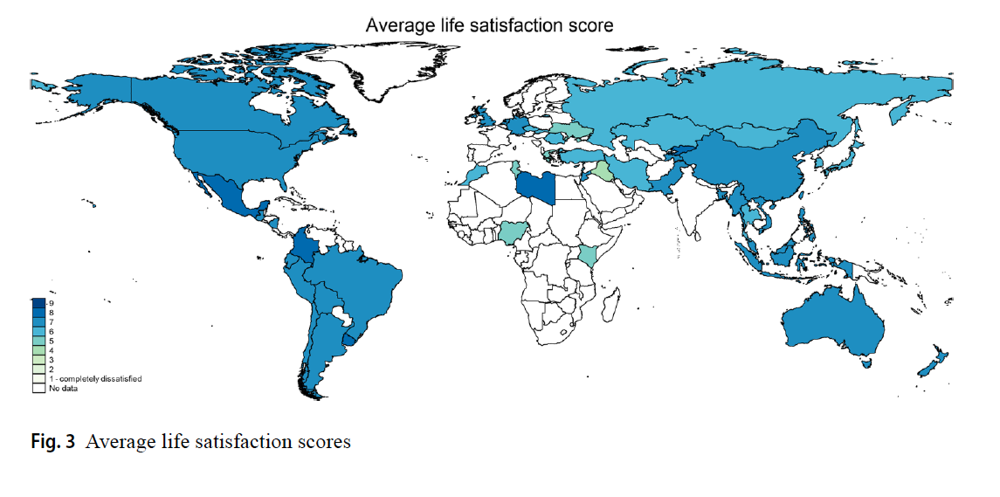
The analysis connects individual experiences of life satisfaction with broader national conditions. Lee and Kim found that social connection, confidence in institutions, and economic stability are strongly associated with a person’s sense of fulfillment. A cross-national map included in the report shows higher average life satisfaction in parts of North America, Northern and Western Europe, and Oceania, where these conditions are most prevalent.
In contrast, Eastern Europe and Africa had lower satisfaction, which correlated with higher levels of institutional corruption and inflation.
“Our findings show that economic stability plays a vital role because inflation reduces purchasing power for retirees on fixed incomes,” Lee said. He noted that even when a broader economy appears healthy, the rising cost of necessities like housing and health care creates financial pressure that lowers overall satisfaction.
Lee’s analysis also highlights how unemployment creates a ripple effect of insecurity. “Many older adults remain closely connected to younger family members, so concerns about job loss extend beyond their own situation,” he said. “When people feel uncertain about the environment around them, confidence declines.”
The findings further reveal that influences shift by age group. Among those ages 50 to 64, political governance had the strongest association with life satisfaction. For people 65 and older, social capital played the largest role.
Kim said these relationships grew even stronger in the post-COVID-19 period, highlighting the importance of effective governance and social support for older people, particularly during external shocks.
These findings provide policymakers, health care providers, and community leaders with guidance on improving the lives of older adults. By showing which social and environmental factors matter most, the data can help create better support systems.
Kim suggested that the best way to use these findings is to focus on the immediate social environment.
“If I had to identify one policy change that could make the biggest difference, it would be sustained public investment in community-based social infrastructure,” she said. “Strengthening local programs and spaces that promote social connection, civic participation, transparency, and institutional trust could meaningfully enhance life satisfaction in later life.”
This emphasis on using rigorous data to drive societal improvement reflects the current trajectory of the Broadwell College of Business and Economics. For Ulysses Taylor, dean of the college, the work represents a commitment to high-level scholarship with real-world impact.
"This publication exemplifies the caliber of intellectual contribution that BCBE is becoming known for," Taylor said. "Our faculty are not just teaching business and economics; they are actively shaping how we understand and improve the human condition through rigorous, A-level scholarship."
You can read the full analysis on the Springer Nature website.